FAQs

Showing posts with label Chronic Illness: Experiences and Perspectives. Show all posts

Sunday, August 02, 2015

"Your Life is Your Work", A Week 'Off' and Other Thoughts On Illness to Wellness

Monarch On Cone Butterflies At The Cabin


Going from illness to wellness as quickly as I am is a massive and radical life change. 

Falling in love and being in a relationship is a massive and radical life change.

Having both of these things happen simultaneously is at once exhilarating and overwhelming.

My body--all of our bodies--doesn't know the difference between eustress (good stress) and distress. We feel them all the same. Which means my body is a little tired right now.

I found myself in counseling recently remarking that I felt really tired and overwhelmed again. When Evelyn was able to put into words that my life is changing in massive and radical ways--each one of which would be a big deal alone--I understood why I was overwhelmed and tears welled in my eyes.


View From Our Deck


My PT, Ryan, came back from a training session with my Dr. ANS and a PT he has worked with for many years on how to do very specialized techniques on me. 

Ryan asked the PT: "How do we help her to get her strength back after so many years of inactivity?"

Without pausing, the PT said to Ryan: "Her LIFE is her work."

Think about those words.

They are powerful.

For all of us.


Massive. Radical. Life is my work.

These are the words playing over and over in my mind these days. These are the changes and processes I am going through, trying to find my way day by day.


Cone Flowers

What does it mean that my life is my work? 

Almost every day of the week, I have an appointment that is related to maintaining or improving my health--massage, acupuncture, PT, counseling, medical appointments, etc. I also have a lot of things to do every day at home to maintain my current level of functioning and improve it. I'm also trying to do more and more things for myself that I didn't used to be able to do, as well as take the time to get dressed, put on make-up and do my hair most days.

I am busy all of the time. I struggle to find time for leisure. I struggle to find time to get things done that need to get done. I spend a lot of time and energy on my new relationship because I think that matters a LOT. And I forget to relax and BREATHE.

In this sense, I'm like my healthy friends and family. Overwhelmed. 


Butterfly Magnets!


After Ryan heard the words that "life is your work", I felt a major shift occur in his thinking about what I need to do and how I need to focus my energy. I saw him for the first time completely understand that living with chronic illness is a full-time job. 

He also helped to affirm that the way I am working to improve my health--by engaging in more outings, being more active, working to be more independent--is the way to continue to regain strength and energy.

Neither he nor the PT he met with want patients to be using more energy to do a bunch of exercises at home.

They want LIFE to be the work.


View From Our Deck


Letting this phrase sink in a bit, I realize that this it's not just relevant to my healing process, but to how I live my life overall.

Life itself can be our prayer. How we live it every day, how we interact with others, how we view the world, how we engage with the world, how we spend our time, how we use our precious energy--this is our work and our prayer.
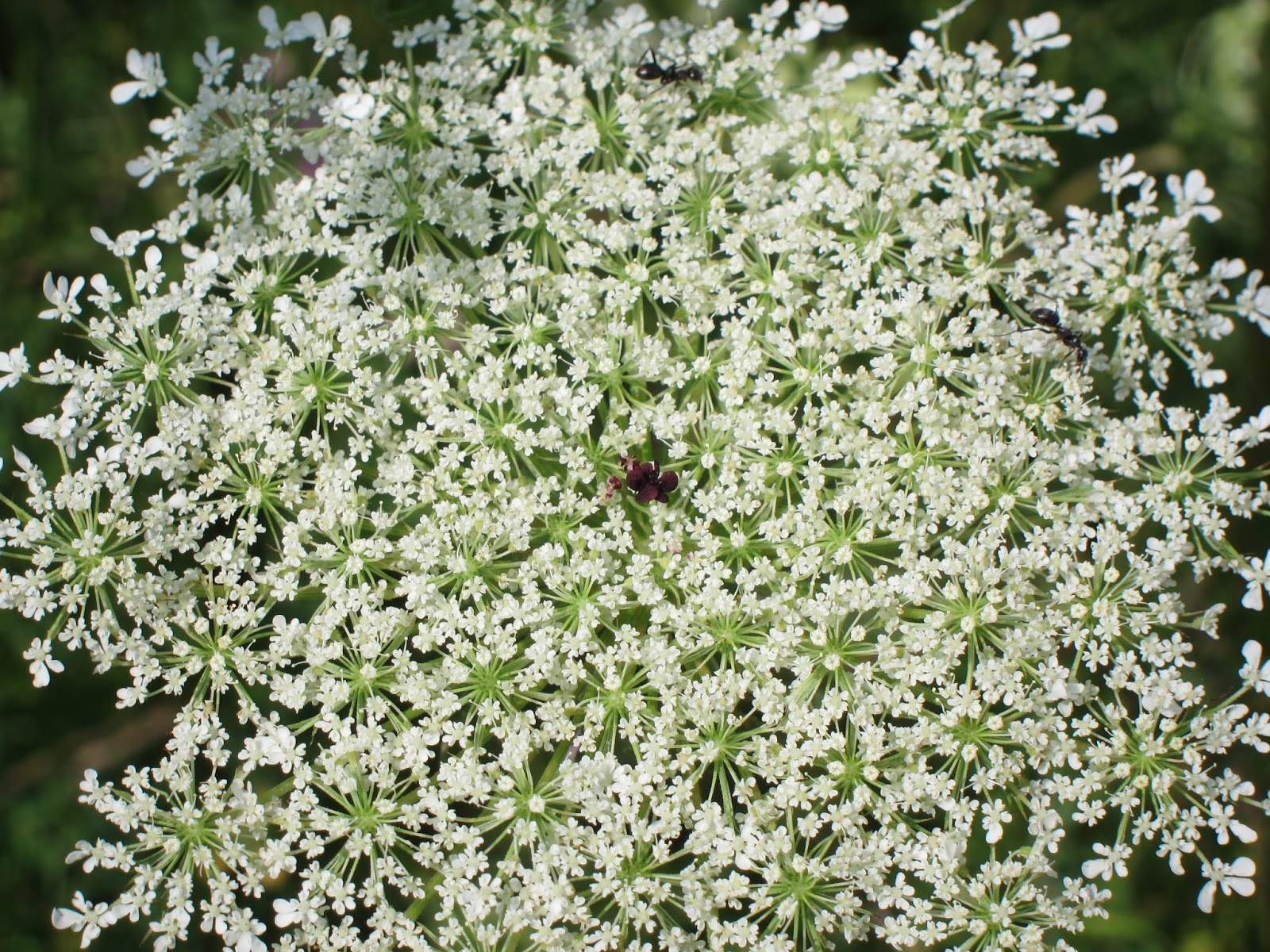

Queen Anne's Lace 


My work right now is to continue to do all that I can to be more independent and more highly functioning and to engage as fully as I can in life. And oh, the thousands of ways I want to engage in this LIFE!

I know many people are asking me or my parents this: Can she work? Can she do a computer job from home? When will she be going back to work?

Let me get this out in the open. Going back to work in any capacity is NOT a goal that is in any of our heads right now. It's not realistic in any way at this time. I still sleep a lot, I still can't focus to read, and I still don't do my IDL's like grocery shopping, laundry or cooking. We are focused as a family on what will give me the best quality of life and on continuing to improve my health--not on getting me 'back to work.' I don't have a 'lot of time on my hands'. 


Native Butterfly


Ryan began to hear me say how tired I was when I came in to see him on Monday afternoons. This meant we really had to back off of the PT.

He said to me: No one every expected you to get better. First, you were the most refractory patient who nobody knew what to do with. Now you're improving in ways no one ever expected. You're a pioneer in this. Dr. ANS should write a case study on you!

In light of this, he said, we really don't know what kind of cumulative effect continuing to push so hard is going to have on your body.


I LOVE Where We Live


He proceeded to give me the best prescription ever!

Ryan told me to take a week off from any appointments and try to get some rest.


Beautiful Farm We Drove By


That is exactly what I have been doing since last Friday.

Mom and I rented a small cabin about 30 minutes outside of town where we RESTED. Truly rested.

We spent four nights there!

We ate and slept. Mom read. I colored and sewed. We went out to eat dinner one night and out to lunch one afternoon in a small town nearby. We did a little shopping at a quant little shop. We sat out on the patio and looked at the mountains, sipped wine, and unplugged. 

I did not check my email or do any texting. I only checked my phone ONE time each day to check in with Kiernan. We talked on the phone each afternoon. He sent me lots of texts and pictures to update me on the puppies.

Phone. Turned Off. It felt great!

Isn't it amazing how we could all take time to sit on our own patios and read, rest, meditate or just 'be', but we so often don't because we're thinking about our to-do lists and the piles waiting for us inside the house?

We were so excited that taking an impromptu vacation to a place that didn't necessarily fit all of my needs was 'doable' for me. It gives us so much more flexibility in terms of travel.


I've used the time since our return to try to get some things done around the house that have been piling up. I've tried to tune in more to the puppies. I'm taking some time to write. I've done some cleaning and organizing. I'm not sure how I feel about returning to my faster pace on Monday. 

Ideally, I need to find ways to carve out time for writing again, for listening to audiobooks, for watching a TV show, for having some time at home to work on projects that I really long to complete.  I long to do things here that haven't been done for 17 years. 

Because all of my afternoons are taken up by appointments, I am not able to get blocks of time to write or work on things at home, which has lead a lot of stress.

How did I so easily let things that were routine parts of my day--an hour of TV, an hour of an audiobook--slip away? 

It's so easy to get caught up in the new freedoms of improved wellness that I find myself trying to squeeze something into every second of the day. TV used to be a necessity because I didn't feel well enough to do anything else. Now, I often do feel well enough to try to do a little something else, and don't carve out the time for my body to relax. 

Not carving in time to calm my ANS and quiet my mind has left me highly anxious, stressed and overwhelmed. Not taking down time is likely not sustainable, and possibly detrimental to my healing overall. I need to remind myself that I still need rest, that resting is not equal to being lazy, and that engaging in activities I enjoyed when sicker, such as TV or audiobooks, doesn't mean I'm regressing health-wise or cannot be reframed as activities to enjoy whether sick or not. 


We all struggle with balance. I'm not saying that I am any different than any other human being living in today's very busy world. I'm just coming from the perspective of being a person going through the process of going from illness to wellness after 17 years of only knowing illness. 

I didn't understand the ways in which improving health would be so challenging and, at times, stressful. Most of the stress is eustress--the good kind of stress--but there's distress too. The same goes for falling in love--lots of eustress--but sometimes distress. 


Like the fog clearing on the mountain tops in the photo above, I know my mind and body will find their own clarity. My mind and body will find ways to embrace this new life, these massive and radical changes in healthier, less overwhelming ways. I'll figure out where my energy needs to be focused, and I'll continuously be trying to readjust to accommodate my health.

It's a process I feel fortunate to be part of. It's a process I never thought would happen. Yes, going from illness to wellness is sometimes very hard. And so is falling in love. 

Yet, I wouldn't change them for the world. Not at all.

LIFE is my work.

I am very very blessed.

Blessings,

Emily


Sunday, March 03, 2013

Setback


Bouquet of Flowers from my BFF.

2012 seemed to bring a level of stability in my health that 2013 has not. I've been struggling to find 1. the energy to blog, and 2. the words to say. I've been busy writing fun blogs about the puppies, but today, it's time to be honest about my health. Here's a brief update of the past few months.

When, in November, my GI symptoms started, I assumed it would be a short-lived flare of gastroparesis typical of my pattern--a few days of a bland diet, a few Reglan, and I'd be back to my baseline.

Instead, the gastroparesis flare continued, worsening gradually until, by January it had become intolerable. As a result of my extreme GI symptoms, my ANS decided to soar into a MAJOR flare too. Since that time, I've been completely absorbed by the demands of managing my health needs.


I found this explanation from Dr. ANS of how the two play off of each other incredibly helpful:

"Any pain alarms originating from the GI tract will flood the central nervous system, and overwhelm the ANS with signals of incoming danger. As a response, the ANS is on red alert, constantly. A red alert ANS translates into worse fatigue, fogginess, etc." 


"Just a Little Cheer" is what Jeannine wrote on the card.


Our focus over the past few months has been to calm both the GI system down and the ANS. I've been bonding a lot with my healthcare team: Dr. ANS, Dr. GI, massage therapists, and now an acupuncturist. Almost daily I have an appointment to go to or a test or an email to write. That has taken every ounce of energy I have. 


A combination of medications, an endoscopy with Botox injected into my stomach, acupuncture and juicing to get nutrients has gradually been improving the gastroparesis symptoms, but they are still not resolved. We're all puzzled as to what might have caused this flare or why it has been so difficult to settle down. 

The ANS symptoms are proving to be an even greater challenge, as our hope was that when the GI symptoms began to settle down, the ANS symptoms would also. Within under five seconds of standing I am having tachycardia and feeling as if I will faint. I'm unable to pick out an outfit for the day myself,  stand at the sink to wash my hands, get something out of the refrigerator unless it is where it can be grabbed immediately, make it up the elevator to my appointments without difficulty. Getting dressed, getting a bath, letting the puppies out have taken on a new level of difficulty. I have stools and chairs set up everywhere! Even sitting results in a fast heart rate. I'm exhausted beyond my usual, I feel too sick to watch a movie or a TV show that requires concentration, train the puppies, or go on any sort of outings, and my evening check-ins with Jeannine result in air hunger and exhaustion. It's been a very long time since I have had this level of POTS symptoms.

Dr. ANS is working closely with me to try to calm the ANS down, but we're both puzzled and presented with a challenge that has proven so far, not willing to resolve. Our hope is that the acupuncture, massage, juicing, some medication tweaks, etc. will all bring improvements. I'm incredibly blessed and grateful that I have access to the kinds of treatments and care that I do. Sometimes, though, I long to not be going to an appointment every day to deal with my health.  


One of the most beautiful bouquets I've ever received.


Mom and I are both feeling drained and exhausted from this setback. It's been all-consuming, and I miss having time to reach out, blog, train the puppies, or enjoy other things. When I am going to appointments for health reasons every day, I don't have energy for anything else, which leaves me feeling isolated, lonely and sad. Thankfully, I have friends and family who continue to reach out, a caregiver who will pick out clothes and make green juice for me, an amazing healthcare team, books to listen to when I am able, fluffy TV shows, lots of pretty nail polish, and three awesome furbabies to lighten what can sometimes feel unbearable.

I wanted to at least reach out via my blog today to let my friends and family know why I dropped off the face of the earth. It's hard to write these posts because I so want to have better news. On the days that I don't have appointments (which are few and far between), it is my hope that I can expand on the treatments I have received and am receiving. For now, I'll try to use my blog, Facebook, texting/iMessage, and Path to keep in touch as I am able, and apologize as always that most emails go unanswered (but never unappreciated!).


Blessings,

Emily


Thursday, February 07, 2013

Pajamas and Puppies

Tovah and Gershwin are all snuggles!


I'm in the midst of what might be called, in the world of CFS, "a post-exertional worsening of malaise", which is basically a really fancy way to say I'm in a major flare of fatigue and other symptoms. 

Some days I truly wonder how a human being can be this exhausted for this long. As Laura Hillenbrand, author of both Seabiscuit and Unbroken, said of this illness (which she also has): 

"Fatigue is to this illness what a match is to a nuclear bomb."

This flare is in part due to a three month long flare of gastroparesis (which thanks to the intervention of Botox is over) and in part due to my decision to put my emotional well-being ahead of my physical well-being and travel to Chicago for my uncle's 80th birthday. I hope I'll be able to blog about both of these!


And a kiss from Twinkle Toes. :)


Today was a Pajama Day. I'm happy that Gershwin and Tovah are so eager to oblige when it comes to cuddling! :) As soon as Gershwin sees me heading towards any place I might sit, recline or lie down, he immediately puts his paws up on me, asking to be picked up and snuggled.  Asher dutifully lies on the floor next to me. 

Mom just happened to catch these candid moments on camera today, and I love them.


Even on the most difficult days, they make me smile. 

Blessings,

Emily

Tuesday, November 11, 2008

Being Computer-less: Lessons Learned


Note: I wrote this blog over a month ago (October 5th to be exact) and somehow never came back to it. I've decided to publish it, even though I have to say, my old habits haven't changed much! But my view of my computer as a necessary and crucial lifeline has stayed the same. 

After my computer crashed, I spent the next three weeks with limited access to the Internet via my mom's computer. Because she has a desktop and not a laptop, I was only able to check in for short little bits of time during those three weeks.


Oddly, being on a computer other than my own felt like somehow being in an unfamiliar and strange place. Where were MY icons? Where was my Picasa program with all of my pictures? Where were all of my saved passwords and websites? What was I gonna do with those new pictures I just took and wanted to download? When I got my own computer back it felt like a part of me was back.


I guess that was when I realized that three weeks without a computer had taught me a few lessons...both about the good and the bad of my life in the computer age!


While I learned, mostly, that my computer is a lifeline for me, I also learned that I've developed a few bad habits with it! My computer has taken up residence in my bedroom, which means that every time I get up to pee (which is a zillion times a day) or come in to my room for something I check to see if I have new email. At night, I get distracted checking email or such rather than staying focused on a TV show or book on CD and doing a better job winding down for the night.


So, I'm very much looking forward to trying to be more disciplined about that aspect of things. I know this will be much easier when we do some rearranging so that I use a separate room as a study...that way, I can leave my computer in there at night. I'm definitely addicted to checking for new emails and such, so this is going to be hard to change!


Still, while I often say I'd like to just throw my computer out the window some days (especially when it's not working--which has seemed to be more often than not in the past year), in reality I couldn't do this. I admire my friends who manage their lives without email or internet, who rely soley on in-person interactions, telephone and snail mail. I often wish I could be in that world.


I thought maybe I'd learn to like my little world without a computer. I thought that I would have more time and energy for other things. I thought I would get all sorts of other things done. I thought I'd call more people or sort through more piles of papers sitting around.


In reality though, even without my computer around, I didn't get anything more done than I would have otherwise. I definitely watched more TV shows and listened to more books on CD--both of which I enjoyed, but my productivity levels didn't increase.


As much as I'd like my world to be less dependent on the computer and internet, I realized how much it HAS to be, given my current life circumstances.


There are only so many activities that can be done reclining or supine, require very little physical activity, and can be done quietly.


While I always prefer in person visits or phone calls, I realized how little energy I actually have for them most of the time. Even without my computer around as a 'distraction' I wasn't able to make more phone calls.


I realized why I rely so much on the computer to stay connected to the outside world. I often go days or even weeks without going anywhere outside of my house other than to the doctor's office for a shot or for a little walk over to a neighbor's house for a few minutes.


During the three weeks without a computer, I discovered how often I felt like I didn't have a 'place' to go. I didn't have the energy to sit up long enough to write out a long email to a friend letting her know how down I was feeling and what was really going on. I didn't have the energy to blog about all of the things spinning in my head. Instead, it all just kind of 'sat' there inside me.


I've often been critical of my time on the computer as being wasted or unproductive. But, in reality, most of my time on the computer is spent connecting with others either through email or blogging (and yes, now Facebook). I read my friend's blogs to stay connected to them. I email my doctor's with questions. I check the weather so that I can set out my clothes the night before for the next day. I check out and renew library books. I find out what books are new and what music is new. I check the news. I see my friend's pictures and watch their children grow.


My computer is, in many ways, my lifeline. While I was without it, I about drove my mom out of her head because I talked EVEN MORE to her than I do when I have a computer.


I wish my computer wasn't so much a part of my world. I wish that my world was bigger and my adventures broader than this computer screen.


But at the same time, I'm grateful that this little computer can bring a world to me in ways not even possible earlier in my lifetime. I'm grateful that it keeps me connected to my friends and family in ways I couldn't do otherwise. I'm grateful that it keeps me part of the world. I'm grateful that it gives me an outlet for writing. And I'm grateful for the pace it allows me--one of working in bits and pieces--as my energy allows.


I still have a love-hate relationship with my computer, but for the most part, three weeks without it taught me that I need a computer to have a sense of being part of the world. Maybe someday that will change, but if not, at least I have the resources to have a computer and internet.


I know for myself and many of my other friends with chronic illness, we rely on our computers for so much more than we ever imagined.


Here's to 'healthier' computer use in my world after my computer forced me into such great introspection! :)


Blessings,


Emily

Photos:  My Dell Inspiron 8600--approaching age five. And letting me know it too!

Monday, September 08, 2008

Lost In a System Where Doctors Don't Want to Listen

I am always leery of how many articles or news stories to post related to health-care, Dysautonomia, or Lyme disease. The goal of my blog is simply to share my life story and information, not to push my ideas or beliefs on anyone. Yes, I may be a passionate Hillary supporter, but that doesn't mean that I expect you to believe the same thing. I share about it with you because it is such an important part of my life.


So, in that spirit, I have found a few articles here and there that I do think are deserving of being posted on my blog for those who are interested. I have a wide range of readers--some with greater interest in these sorts of topics than others. Remember, the delete button is always available in such cases when you are not at all interested in reading! :)


Sometimes I find an article that explains something better than I believe I ever could. And it touches on topics that I am both passionate about and that people often ask me about.


Jeannine passed this article on to me. I have over time, seen several articles discussing this sort of crisis in the health care system. But it also answers, in many ways, several of the questions that I am often asked:


Why did it take so long for anyone to figure out what was wrong?

Why did so many doctors push me out the door? Why did some completely refuse to even take my case?

Why did I have to see sooo many doctors before anyone listened?

Why is it so difficult to find a doctor willing to take my case? And why is this happening to so many of your friends on DINET?

What can we do to make it so that doctors have time to be doctors again? To have time for patient care?

What will happen when the doctors I have now, all nearing retirement age in the next ten years, are gone? What will we do to make sure patients like me continue to have quality health-care?


This article brings an often undiscussed part of the nation's health-care crisis to attention. And it also says hats off to those doctors that I have been so blessed to find--Dr. ANS and Dr. Lyme--who are willing to give me the time and attention my case requires.

Sadly, last summer I lost one of the key members of my health-care team--Dr. PCP--because he left the practice. He had been my PCP for five years and through the worst of my illness. He believed in listening. He told me that 80% of cases could be solved if doctors would just take the time to listen to the patient. I miss him. I'm still trying to establish a working relationship with my new PCP. When someone has not been witness to the course, the ups and downs, the extremes of this illness it is very difficult to 'teach' them. It's hard to lose the continuity of care I had worked so hard to find and been so blessed to have.


Here's to better days ahead for both the providers and the recipients of health-care in America.


Blessings,

Emily

P.S. I only started this blog over a month ago! Oops!


HARD CASES
Lost in a System Where Doctors Don't Want to Listen
By Benjamin H. Natelson

Sunday, August 3, 2008; Page B03

I'd like to tell you about one of my patients. She's the kind of patient that I enjoy seeing but that many doctors go out of their way to avoid. This means that she's also the kind of patient I worry about most -- a patient who in the near future may be stranded without proper care as fewer and fewer doctors, constrained by time and the economics of our health care system, are willing to perform the fundamental task of diagnosing difficult or unclear medical problems.

My patient is a 37-year-old woman, a mother of two teenagers, with a busy career. She was in perfect health until July 2007, when, overnight, she came down with what her doctor said was a case of flu. This "flu," however, wouldn't go away. Her doctor assured her that she'd get better, but three months after her first visit to him, she was back in his office, still feeling ill. The doctor did a thorough medical evaluation, told her that he couldn't find anything wrong and again assured her that she'd eventually recover. A few months later, she was back again. This time, as she described it to me, the doctor sort of shrugged his shoulders and told her that maybe her problem was all in her head.

As you might imagine, the patient was put off by her doctor's dismissal, which set her off on a gyre of doctor-shopping. Over the next six months, she saw eight physicians, as well as a chiropractor and a homeopath, without getting a diagnosis or any real help. Finally, she did an Internet search and found me, a specialist in medically unexplained illness. All her tests were normal, but I listened to her and was ultimately able to make a diagnosis of chronic fatigue syndrome. We then launched into the treatment of her symptom-based illness, a slow process that unfortunately doesn't end in a cure but often leads to improvement.

The fact that this woman couldn't find a doctor to help her until she found me says a lot about where the U.S. health care system is heading. The economics of modern medicine have converted the doctor from Ben Casey to a factory worker on a conveyor belt, and those economic forces are driving more and more physicians toward specialties where they can spend less time with patients and earn more money.

Learning how to make a diagnosis is a critical part of medical education. It requires the doctor to listen to the patient describe the illness and then put it in a personal health framework by asking about other symptoms, previous medical problems (extending to the patient's family) and elements of the patient's life story. Doctors usually schedule an hour for these initial consultations, then 30 minutes for follow-up appointments.

Half an hour of a doctor's time is normally plenty for a straightforward health problem and more than enough for a cold with a runny nose or a cough with no fever. But what happens when your symptoms don't add up to a clear-cut diagnosis? Studies have shown that in more than 50 percent of cases, patient complaints don't have any diagnosable medical cause that can be determined by careful laboratory testing. Pain, fatigue, dizziness and trouble sleeping are among the most common symptoms, and doctors have problems with these because they don't point to any particular diagnosis.

When that happens, the diagnostic algorithm learned in medical school breaks down. The doctor's not sure what's wrong with the patient, and if he has a busy office, he won't have time to think through the patient's complaints to arrive at a coherent diagnosis. Very often, when all the tests are normal and time has run out, the doctor will conclude a visit, as my patient's initial physician did, by saying: "There's nothing really wrong with you. I'm sure you'll feel better in a few days -- or weeks."

Even doctors with time often prefer dealing with straightforward medical problems. I have a friend who's an allergist in private practice. When I asked him whether he'd be willing to work with some of my patients, he quickly said no. Why, he said, would he want to tackle difficult cases like that when he can take someone suffering from severe allergies and make them better in a day?

Doctors are being lured away from primary care by economic factors as well. Eighty percent of medical students have to borrow money for medical school. The expected median debt of this year's graduating class is about $120,000 for state medical schools and $150,000 for private, according to the American Association of Medical Colleges. At the same time, medical students face a candy store of career choices, all with widely varying earning (and debt-reduction) potential.

I, for instance, am a medical school professor with a practice devoted to patients with medically unexplained symptoms such as fatigue and pain. My patients often have complex medical histories and feel they're at the end of their rope. If a patient has Medicare coverage for disability caused by an illness, Medicare will reimburse me $196 for each hour of interaction with that patient. After expenses and other charges, I'll keep $86, a very good hourly salary.

But consider the neuroradiologist, who specializes in interpreting brain MRIs. Just a few years ago, it would take a radiologist a long time to organize and view many sheets of a patient's X-ray films, but today, thanks to computerization, the well-trained neuroradiologist can assess dozens of images of the brain in just a few minutes. He or she can probably read a patient's images and dictate a report in about 15 minutes. At my previous institution, the hourly reimbursement from Medicare was $492, and the doctor's take-home totaled $216, a substantially better salary than mine.

Physicians in a procedure-driven specialty such as neuroradiology -- and there are many others, such as cardiology and anesthesiology -- always earn more than patient-centric doctors. American medical students are aware of this as they make their career choices. And fewer and fewer are choosing patient-oriented medicine: In 1996, American graduates filled 76 percent of residency training slots in family medicine, while in 2002, they filled only 48 percent. We see similar shifts in general internal medicine. The remaining positions are filled by foreign-born and foreign-trained medical school graduates. They pass the same qualifying tests for licensure as American graduates, but cultural diversity and varying communication skills may affect their approach to patients and their ability to hear subtleties in their patients' stories.

Society has come up with a partial solution to the growing gap in primary care providers: "physician extenders." These master's level health-care professionals are trained to deal with commonly occurring, easy-to-diagnose problems: a flu, hay fever, a splinter, even severe chest pain. Usually, however, they haven't had enough training to give them the know-how to sort through a complex medical history to arrive at a diagnosis that isn't immediately evident. When they're stuck, they have to call the physician, and by then, the 30-minute visit is very often over. The patient is left hanging and disappointed -- on his or her own to figure out what to do next. The inevitable result: patients falling between the cracks of classical medicine.

There's one silver lining in this situation: the increasing number of women choosing medicine as a profession. Approximately 50 percent of most medical schools' entering classes today are women. This trend may work to offset a major patient complaint -- that doctors don't spend enough time listening to them. Research studies show that women in general and women physicians in particular are better listeners than men. Since the turn toward more women in medicine is relatively recent, I'm not sure which path the young female doctor will choose, but I can say anecdotally that quite a few of my own female students seem to be choosing primary care -- either family or internal medicine. I hope that in the next few years, their presence may help offset the dearth of U.S.-trained doctors in primary care.


Meanwhile, what are patients with an elusive diagnosis to do? If they're fortunate enough to live near a medical school, they can search the doctor list for generalists. Physicians in academic centers are encouraged to see patients as part of their duties, and they often have more time than their colleagues in the community. More important, patients can help themselves by knowing more about their bodies, how they work and what can go wrong with them.

But finally, patients will have to understand that finding a doctor who has the time to listen, diagnose correctly and then know how to treat them is going to get harder and harder. Reversing the trend away from patient-oriented and toward procedure-oriented medicine will require attention by legislators as well as medical educators. Reducing the debt of newly minted doctors who choose primary care might be one way of doing this. Cutting back on both the number of postgraduate training positions in procedural medicine and the salary paid such trainees, while raising the salaries of those in primary care, could be another.

None of this will happen, though, unless patients make their voices heard. Otherwise, they may just find themselves on their own the next time puzzling symptoms arise.


info@painandfatigue.com


Benjamin H. Natelson is director of the Pain and Fatigue Study Center at Beth Israel Medical Center in Manhattan and author of "Your Symptoms Are Real: What to Do When Your Doctor Says Nothing Is Wrong."

Friday, August 01, 2008

The 'Don't Know' Mind


Maxine is more than one of my massage therapists. She is my spiritual guide, my spiritual mentor, my spiritual counselor. I'm wiser every week because of her. I'm blessed to have the consistency of her as a member of my healing team for over nine years now. No other member of my health-care team has travelled this journey with me for as many years.


Many weeks Maxine and I find ourselves facing life situations that leave us questioning and searching for the same spiritual answers. My time with Maxine is often like one 'God moment' after another. I don't really know any other way to explain it.


This week she spoke of her latest spiritual struggle and resulting insight.


She referred to author Stephen Levine's concept of the 'Don't Know' Mind.


At first I looked at her as if she was talking nonsense. The 'Don't Know' Mind? Huh?


The idea is that it is okay not to know how you feel about something.


I am always wanting to know the answer, how to fix it, and how I feel about it.


I over-analyze, talk my mother's ears off, can't stop my racing mind, searching for the answer to something that maybe, just maybe, if I let it be, the answer will come to me in time. Sometimes we feel this pressure from ourselves and sometimes we feel it from others. How do you feel about this or that? If I say I don't know, I feel like something is 'wrong'.


I love the concept of letting ourselves go to the place of the 'Don't Know' Mind. Simply letting ourselves say, "I don't know". It's possible that going here, if we are spiritual people, also gives us space to be with God.


No, maybe it's not earth-shattering or revolutionary in any big way, but it was for me yesterday in the place that I am right now.


That is what is so special about my relationship with Maxine and the journey we have travelled together spiritually over the years. Both of us went from not being spiritual beings at all to becoming spiritual beings. She's far ahead of me on her journey, and passes down to me the wisdom she received from her mentor.


The gift is that each week she meets me on my journey just where I need to be met. This week, it was letting myself say: "I don't know how I feel." And there are a lot of things I don't know how I feel about right now!


Maxine is one of those people who has touched my life in such a profound way I don't know how to even express it. She has been here for me every step of the way through this illness--physically and emotionally. The truth is that, in illness, sometimes even the healers feel helpless. After my gallbladder surgery, in truth, I was too sick to be helped by her massage therapy. But her calm healing touch, her prayers, and her listening ear could. Sometimes all we need is a hand to hold, faithfulness, and someone to listen and wipe our tears away. For the one hour I was with her, I felt safe.


Thank you Maxine for making my life so very much richer.


Imagine how many "Maxinisms" I have if I learn something like the 'Don't Know' Mind every week?! A LOT!


Blessings,


Emily


Photos: Maxine wearing the prayer shawl I knitted for her (photo from May of 2006). This was my first knitting project after my gallbladder surgery. Maxine before she headed to Africa for a retreat (photo from May of 2005). Yes, these pictures are more than a couple of years old! I've been meaning to post them forever!

Tuesday, June 03, 2008

More of Me, Luke and the Gang!


Surrounded by four of the puppies all at once!


Okay, so I really am in love with little Luke...


More of Luke! I love this shot Mom took. (She was there, but she didn't let me take any pictures of her! Pbth on her!) Anyways, Luke likes to give kisses.


Luke was already asleep on my lap and then Sophie crawled up to snuggle too. They like to snuggle up with one another to sleep.Posted by Picasa

Thursday, May 22, 2008

The Equation I Created: Hillary Means Hope


During the weeks leading up to the Pennsylvania primaries, our house was bursting with energy, excitement, joy, and life in a way we had not felt for a very long time. We had a volunteer staying with us, Mom worked tirelessly for the campaign doing everything from canvassing to being the food coordinator. We felt alive and energized in a new and exciting way.


I felt, for the first time in a long time, that I was a part of something bigger than me. Something so big and so important for the future of our world.


Hillary won big in Pennsylvania. We stayed on cloud nine for a few days. And then, suddenly we felt a sense of anomie. Where was our focus now? We had been flying on adrenaline for weeks and literally collapsed after the primaries.


Even before the Pennsylvania primaries, I found that I had come to equate electing Hillary Clinton as president with hope for myself.


What? You might be scrunching up your brows and saying: what does she mean by this?


I think I literally went silent after the primaries because I lost my sense of direction. And, now I feel like I'm losing it more. I had to write this post because what has been happening with Hillary has been directly related to what has been going on with me--and explains a great deal of my silence in blogging and emailing.


I've put off blogging about this topic because I am still holding out hope in Hillary. I know how to hold onto hope, even if it seems impossible. The last ten years of my life have been about fighting impossible odds. I'm afraid that if I even imply in a blog that this race is over, that Obama is the definitive Democratic nominee that I've in my own way done what I refuse to do: count Hillary out. And I can tell you, it's the last thing she would want me to do either.


Regardless of the outcome, I'm feeling disheartened, frustrated and even angry at the process. But that's not what this blog is about. It's not so much a blog about politics as it is about my own journey to make sense of hope and how personally I feel affected by Hillary.


Somehow, in the past few months I came to equate Hillary with hope in my own self. As hope for her has looked more and more grim, I have felt my own sense of hope flat line.


How do I explain this crazy equation I came up with?


This year is 10 years of this and ten years of that--my ten year college reunion, my ten year anniversary since graduation, my ten year anniversary of getting sick. Somehow I had to find a way to make 2008 seem like a year of possibilities rather than a year of endings and sad markers.


What I knew for sure this year was that Hillary meant hope to me. That if she was elected president my world and my future were bright along with the future of so many other people. Suddenly I had hope in America again. And, on a personal level, I had hope for my own life in a new and profound way.


Hillary's health care plan would change my life profoundly. Obama's will not. Hillary is ready to break the biggest glass ceiling a woman can break. She's going to change the lives of families, children, caregivers, and women in ways that no man ever will see clearly enough to do. She would make sure research into autism and all sorts of illnesses received its long-neglected and well-deserved funding. I believe in Hillary on all levels, but personally, I am depending on her to give us all, including myself, the health care I need and deserve, to stop living my life in fear of what Medicaid won't cover, to stop wondering what to do if I ever lost Medicaid, and to stop worrying what to do when my parents are gone to keep the government from taking any money they try to save for me.


I want Hillary to win for me and for my future. But I also want her to win for so many other reasons and for so many other people. I want her to win, too, for my mom to see that her hard work, and that of her generation has mattered and made all the difference.


When Hillary came to our town to speak and I was able to see her she spoke of people with visible and invisible disabilities. Have you ever heard a candidate say these words? Have you ever imagined that someone might say these words in a 35 minute stump speech? I never did. And in that moment I knew even more than ever before that she was the woman I wanted in the White House.


She inspires me beyond what I know how to express. The more she fights, the more I love her. The more she stands up in a man's world, the more I love her. The more I learn about her plans for America, and me, the more I love her.


I know most of my readers aren't Hillary supporters. I know some people feel disengaged and disenchanted with politics. I know some people feel it doesn't effect them.


I feel that every day of my life I'm affected by the decisions that our government has made about taking care of families, people with disabilities, the poor, women and children.


Where do I go from here? I can't turn on the news without hearing the pundits declaring it's over. I won't count Hillary out until she is out herself. I will support her taking her campaign all the way to the convention. I won't entertain thoughts of who to vote for until I know who the nominee is for sure, because on some level I still think she's going to pull this thing off.


In the meantime though, the hope isn't as bright as it was when we saw her take Pennsylvania big time. I've lost my sense of feeling like I'm a part of something bigger.


And, mostly, I'm trying to figure out how separate the equation I made--that having Hillary as president is essential to my own healing and hope.


How do I do this? How do I create a healthy balance for me and for Hillary?


Blessings,


Emily
Photo: Front page photo from our local newspaper of Hillary speaking in our town. Yes, this is the exact view we had of her!